Ashfaq Academyof Clinical Medicine

Paediatrics

Complete Paediatric Exam Preparation

Structured, high-yield preparation for postgraduate paediatric exams.

  • Starts1 November 2026
  • FeePKR 8,000
  • FormatLive online + 6-month recordings
  • Time8–10 PM PKT on Zoom · Mon, Wed, Fri & Sun8 PM PKT = 7 PM UAE · 6 PM KSA · 3 PM UK (GMT) / 4 PM UK (BST)

Who can join? Doctors only: FCPS-II, IMM & MRCPCH candidates

Why this course

What you get

  • Cover high-yield paediatrics system by system
  • Present long and short cases with a clear structure
  • Practise TOACS/OSCE stations and viva questions
  • Learn exam technique and time management
  • Sit mock exams with feedback

Each batch gets a private WhatsApp group where Zoom join links, recordings and case discussions are shared.

Sample certificate

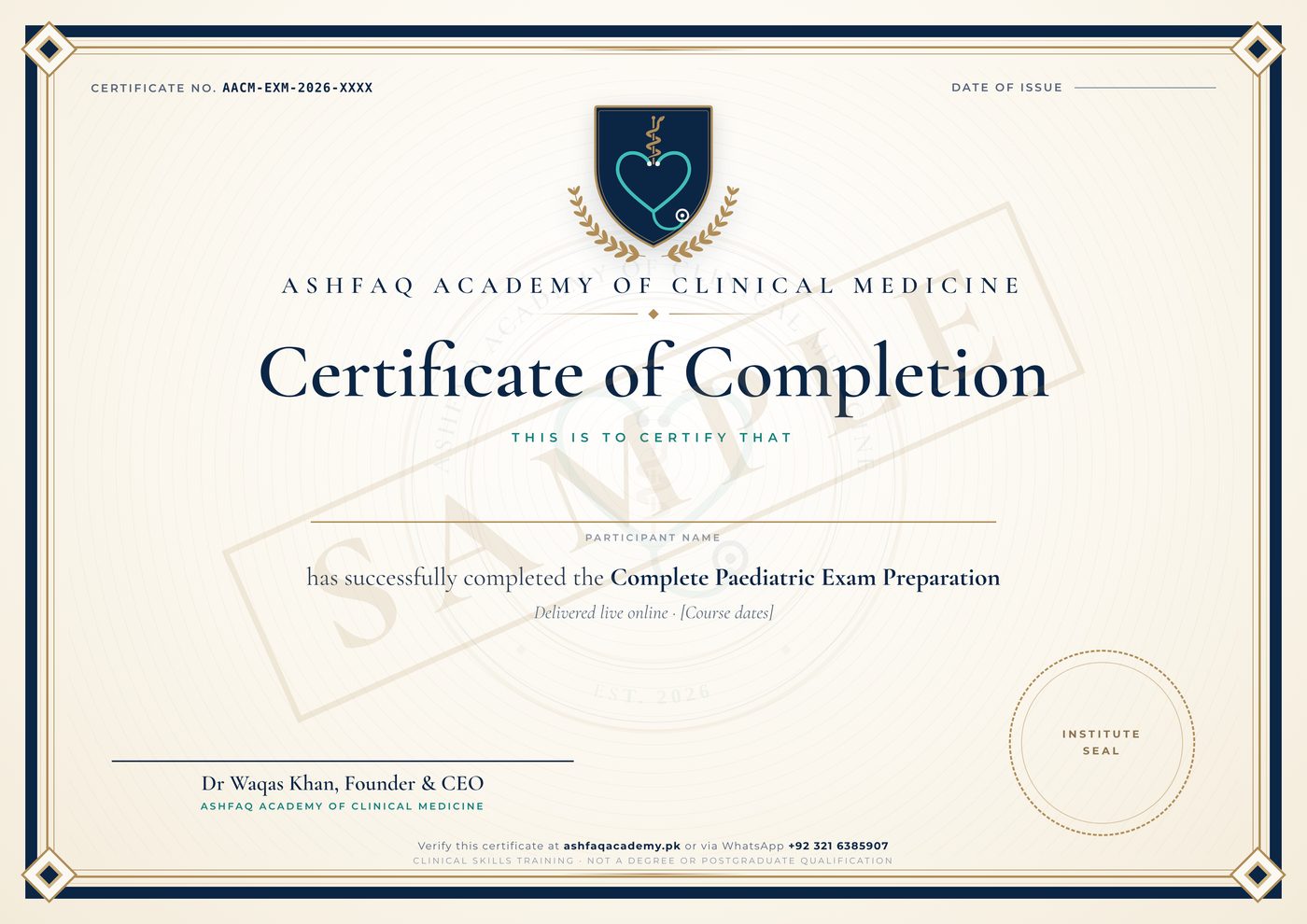
Sample certificate of completion from Ashfaq Academy of Clinical Medicine, marked SAMPLE SAMPLE
Sample certificate of completion (tap to enlarge). Yours carries your name, the course dates, a certificate number, Dr Waqas Khan's signature and the institute seal. PDF
Dr Waqas Khan, Founder & CEO
Who teaches you

Dr Waqas Khan

Founder & CEO · Head of Paediatrics

  • MBBS
  • FCPS (Paediatrics)

Trained at The Children's Hospital & University of Child Health Sciences, Lahore.

Currently at Bahria International Hospital, Lahore.

Meet the faculty →

Course details

About this course

Overview

A structured two-month course for doctors preparing for FCPS Part II Paediatrics, IMM, MRCPCH and other postgraduate paediatric exams. It combines system-wise, high-yield theory with clinical examination practice, exam technique and mock exams, so you know exactly what examiners look for.

Who it's for
  • FCPS Part II Paediatrics candidates
  • IMM Paediatrics candidates
  • MRCPCH candidates (theory and clinical)

Eligibility: Doctors only: FCPS Part II, IMM and MRCPCH candidates, and other doctors preparing for postgraduate paediatric exams.

Dates, timings & fees
StartsModeFeeRegister
1 November 2026
2 months
Live Online PKR 8,000 Register →
1 December 2026
2 months
Live Online PKR 8,000 Register →

Timings: 8–10 PM PKT on Zoom · Mon, Wed, Fri & Sun (8 PM PKT = 7 PM UAE · 6 PM KSA · 3 PM UK (GMT) / 4 PM UK (BST)).

Batches start 1 November and 1 December 2026. Every enrolled student gets 6 months of access to the session recordings. Recorded-only access is also available, with the same 6 months of access: register and choose "Recorded", and we will share the details on WhatsApp.

How you can take it
Curriculum

What we cover

Open a day or module below. Everything is still here — just collapsed so the page stays easy to scan.

  • 2 months per batch (batches start 1 November and 1 December 2026): 8 weeks, 32 live sessions of 2 hours each (64 hours) on Zoom, every Monday, Wednesday, Friday and Sunday, 8–10 PM Pakistan time
  • 16 system modules in order, Neonatology to NICU, covering 447 exam topics — everything asked in Qbank, LANGE & PreTest
  • 45 long-case, short-case & TOACS approaches for the clinical exam (40 cases plus 5 TOACS station sets)
  • Four live sessions a week, a grand test at the end of each of the first seven weeks, and a final week of NICU, crash revision and exam practice
  • For FCPS-II and IMM Paediatrics; also suits MCPS and MRCPCH candidates
★ = most frequently tested topic · bold = frequently tested. Each module shows its headline topics; all 447 topics are covered in the Curriculum & Study Guide shared with every registered student.

Week by week

  1. Week 1Neonatology · DevelopmentS01 The newborn: resuscitation, jaundice, birth problemsS02 Neonatal infections, surgical newborn, cholestasisS03 Growth, development & behaviourS04 Genetics & dysmorphologyGrand Test 1 (scheduled class day) — Neonatology · G&D · Genetics4 sessions
  2. Week 2Nutrition · InfectionsS05 Nutrition, malnutrition, micronutrientsS06 Inborn errors & neuroregressionS07 Fever, sepsis, CNS infections, TBS08 Exanthems, VPDs & immunizationGrand Test 2 (scheduled class day) — Nutrition · Metabolic · Infections4 sessions
  3. Week 3Infections · Respiratory · CVSS09 Enteric, tropical, HIV & community paedsS10 Upper airway, ENT, bronchiolitis, pneumoniaS11 Asthma, CF & chronic lung diseaseS12 Congenital heart diseaseGrand Test 3 (scheduled class day) — Infections · Respiratory · CHD4 sessions
  4. Week 4CVS · Haem & OncS13 Rheumatic & acquired heart disease, ECGS14 Anaemias & marrow failureS15 Bleeding, thrombosis, white cellsS16 Paediatric oncologyGrand Test 4 (scheduled class day) — Heart · Haematology · Oncology4 sessions
  5. Week 5GI & Hepatology · RenalS17 Diarrhoea, malabsorption, surgical gutS18 Liver, biliary tree & pancreasS19 Nephrotic, nephritic, renal failureS20 Tubulopathies, urinary tract, fluids, acid–baseGrand Test 5 (scheduled class day) — GI · Hepatology · Renal4 sessions
  6. Week 6Endocrine · NeurologyS21 Growth, puberty, adrenal, pituitaryS22 Diabetes, thyroid, calciumS23 Seizures, raised ICP, malformations, strokeS24 Neuromuscular, movement, inflammatory CNSGrand Test 6 (scheduled class day) — Endocrine · Neurology4 sessions
  7. Week 7Rheumatology · Immunology · Emergency · AdolescentS25 Rheumatology & musculoskeletalS26 Immunodeficiency, allergy, skinS27 Resuscitation, shock, poisoning, injuriesS28 Adolescent medicine, psychiatry, therapeuticsGrand Test 7 (scheduled class day) — Rheumatology · Immunology · Emergency · Adolescent4 sessions
  8. Week 8NICU · Exam PrepS29 Neonatal intensive careS30 Crash revision: the most-tested topicsS31 Grand mock exam (theory)S32 Clinical exam masterclass: long, short & TOACSFinal revision — consolidate your weak areas4 sessions

Module by module

Tap a module to see its sessions, most-tested topics and clinical-exam focus.

Module 01NeonatologySessions 1–2 · Week 1 · 34 topics

S01 · The newborn: resuscitation, jaundice, birth problems

  • ★ Neonatal resuscitation & Apgar
  • ★ Haemolytic disease of newborn
  • ★ Neonatal jaundice & phototherapy
  • Birth injuries
  • Normal newborn & skin findings
  • Infant of diabetic mother
  • Neonatal thrombocytopenia
  • Vitamin K deficiency bleeding
  • +13 more

S02 · Neonatal infections, surgical newborn, cholestasis

  • ★ Congenital (TORCH) infections
  • Neonatal cholestasis & biliary atresia
  • Congenital diaphragmatic hernia
  • Neonatal sepsis & GBS
  • Oesophageal atresia / TEF
  • Neonatal conjunctivitis
  • Duodenal & intestinal atresia
  • +6 more

Long case · short case · TOACS focus

ConditionExamExaminer's focus
Cholestasis & biliary atresiaShort case · Long caseTORCH vs atresia vs hypothyroid · urgent work-up · Kasai timing
Station-style tasksTOACSneonatal resuscitation (NRP) & Apgar · phototherapy vs exchange
Module 02Growth & DevelopmentSessions 3–4 · Week 1 · 42 topics

S03 · Growth, development & behaviour

  • ★ Developmental milestones
  • Child abuse & neglect
  • Autism spectrum disorder
  • Normal growth & anthropometry
  • Sleep problems & parasomnias
  • Enuresis
  • ADHD
  • +19 more

S04 · Genetics & dysmorphology

  • Malformation syndromes, sequences & associations
  • Down syndrome
  • Turner syndrome
  • Prader-Willi, Angelman & imprinting
  • Marfan & connective tissue disorders
  • Achondroplasia & skeletal dysplasias
  • Inheritance patterns & genetic counselling
  • +9 more

Long case · short case · TOACS focus

ConditionExamExaminer's focus
Cerebral palsyLong caseaetiology · motor type & GMFCS · associated problems · family
Down syndromeLong casecardinal signs · AVSD · health-supervision screens · counselling
Station-style tasksTOACSassign a developmental age · plot growth · counsel on risk
Module 03NutritionSessions 5–6 · Week 2 · 25 topics

S05 · Nutrition, malnutrition, micronutrients

  • ★ Rickets & vitamin D
  • ★ Severe acute malnutrition
  • ★ Breastfeeding & human milk
  • Vitamin A deficiency
  • Obesity & metabolic syndrome
  • Vitamin C deficiency (scurvy)
  • Thiamine, niacin & B-complex
  • +5 more

S06 · Inborn errors & neuroregression

  • ★ Lysosomal storage disorders
  • ★ Phenylketonuria & aminoacidopathies
  • ★ Neurodegenerative disorders & developmental regression
  • Disorders of purine, copper & porphyrin metabolism
  • Approach to IEM, hyperammonaemia & urea cycle
  • Glycogen storage diseases
  • Galactosemia & fructose intolerance
  • Lipid disorders (dyslipidemia)
  • +5 more

Long case · short case · TOACS focus

ConditionExamExaminer's focus
Severe acute malnutritionLong caseWHO classification · diet history · secondary causes · ten steps
ObesityShort casesimple vs pathological · screen for comorbidities
NeuroregressionLong caseprove normal milestones · characterise the regression · localise
Station-style tasksTOACSWHO ten steps · rickets biochemistry · breastfeeding counselling
Module 04Infectious DiseasesSessions 7–9 · Weeks 2–3 · 58 topics

S07 · Fever, sepsis, CNS infections, TB

  • ★ Tuberculosis
  • Meningococcal disease
  • Bacterial meningitis
  • Osteomyelitis & septic arthritis
  • Staphylococcal infections & toxic shock
  • +10 more

S08 · Exanthems, VPDs & immunization

  • ★ Immunization schedule & EPI
  • ★ Passive immunization & post-exposure prophylaxis
  • ★ Vaccine contraindications & special situations
  • Varicella & herpes zoster
  • Pertussis
  • +15 more

S09 · Enteric, tropical, HIV & community paeds

  • ★ HIV infection in children
  • Malaria
  • IMNCI & community child health
  • Cat-scratch disease & zoonoses
  • Child health statistics & public health
  • +18 more

Long case · short case · TOACS focus

ConditionExamExaminer's focus
TuberculosisLong casecontacts · diagnosis & ATT · TB meningitis, spinal TB · hepatitis
Immunisation stationsTOACSschedule · catch-up · special situations · post-exposure · cold chain & AEFI · counselling
IMNCI & community stationsTOACSdanger signs · cough · diarrhoea · young infant · nutrition & anaemia · indicators
Module 05RespiratorySessions 10–11 · Week 3 · 28 topics

S10 · Upper airway, ENT, bronchiolitis, pneumonia

  • ★ Pneumonia (community-acquired)
  • ★ Foreign body aspiration
  • ★ Croup, epiglottitis & bacterial tracheitis
  • Stridor & congenital airway anomalies
  • Empyema, effusion & pneumothorax
  • Bronchiolitis & RSV
  • Otitis media & complications
  • +11 more

S11 · Asthma, CF & chronic lung disease

  • ★ Asthma
  • ★ Cystic fibrosis
  • Respiratory failure, ABG & oxygen therapy
  • Interstitial lung disease & pulmonary haemosiderosis
  • Congenital lung malformations
  • Bronchiectasis & chronic suppurative lung disease
  • Primary ciliary dyskinesia
  • +3 more

Long case · short case · TOACS focus

ConditionExamExaminer's focus
Consolidation & effusionShort caseexamination sequence · Light's criteria · when to drain
Bronchiectasis & CFLong caseaetiology sweep · sweat test & CF criteria · lungs, gut, growth
Station-style tasksTOACSinterpret blood gases & spirometry · the choking child · asthma
Module 06Cardiovascular (CVS)Sessions 12–13 · Weeks 3–4 · 27 topics

S12 · Congenital heart disease

  • ★ Tetralogy of Fallot & cyanotic spells
  • Tricuspid atresia, Ebstein & right heart lesions
  • Atrial septal defect
  • Ventricular septal defect
  • Innocent murmurs & heart sounds
  • Approach to congenital heart disease & cyanosis
  • Aortic stenosis & LVOT obstruction
  • Patent ductus arteriosus
  • Hypoplastic left heart & duct-dependent lesions
  • Transposition of great arteries
  • +6 more

S13 · Rheumatic & acquired heart disease, ECG

  • ★ Arrhythmias & ECG
  • ★ Acute rheumatic fever & RHD
  • ★ Kawasaki disease
  • Systemic hypertension
  • Infective endocarditis
  • Myocarditis & cardiomyopathies
  • Pericarditis & tamponade
  • +4 more

Long case · short case · TOACS focus

ConditionExamExaminer's focus
VSD & acyanotic heart diseaseLong case · Short caseprecordial routine · VSD, ASD, PDA, AS, PS · timing of surgery
Fallot & cyanotic CHDLong casetet spells · stroke vs abscess · shunt vs repair · TGA
Rheumatic fever & RHDLong caseJones criteria · carditis · MR/AR signs · prophylaxis · endocarditis
Sydenham choreaShort casedescribe · prove chorea · find the cause · vs Wilson & SLE
Station-style tasksTOACSname the lesion from murmur, ECG & X-ray · manage a tet spell
Module 07Hematology & OncologySessions 14–16 · Week 4 · 38 topics

S14 · Anaemias & marrow failure

  • ★ Aplastic anaemia & bone marrow failure
  • ★ Thalassaemia
  • ★ Iron deficiency anaemia
  • Sickle cell disease
  • Megaloblastic anaemia
  • +8 more

S15 · Bleeding, thrombosis, white cells

  • Haemophilia
  • Thrombosis & thrombophilia
  • von Willebrand disease & platelet function disorders
  • Immune thrombocytopenia (ITP)
  • Coagulation tests & approach to bleeding child
  • +4 more

S16 · Paediatric oncology

  • Acute leukaemias (ALL/AML)
  • Childhood cancer: principles, chemotherapy & late effects
  • CNS tumours
  • Neuroblastoma
  • Haemangiomas & vascular malformations
  • +11 more

Long case · short case · TOACS focus

ConditionExamExaminer's focus
β-Thalassaemia majorLong casetransfusion & chelation · complications · splenectomy · counselling
Aplastic anaemiaLong caseprove marrow failure · exclude leukaemia · Fanconi · IST vs HSCT
Haemophilia & bleedingLong casebleed types · factor dosing · inhibitors · prophylaxis · genetics
ITPLong case · Short casework-up · exclude before “chronic” · manage by bleeding severity
Acute leukaemia & lymphomaLong casenew vs known case · febrile neutropenia · relapse · prognosis
Station-style tasksTOACSclassify anaemia · PT/aPTT screen · safe transfusion · tumour lysis
Module 08GI & HepatologySessions 17–18 · Week 5 · 30 topics

S17 · Diarrhoea, malabsorption, surgical gut

  • ★ Acute gastroenteritis & dehydration
  • ★ Coeliac disease
  • Infantile hypertrophic pyloric stenosis
  • Chronic & persistent diarrhoea, malabsorption
  • Inflammatory bowel disease
  • Hirschsprung disease
  • GERD & infant regurgitation
  • Peptic ulcer & Helicobacter pylori
  • Oesophageal disorders, caustic & foreign body ingestion
  • +10 more

S18 · Liver, biliary tree & pancreas

  • ★ Viral hepatitis (A–E)
  • ★ Wilson disease
  • Pancreatitis & pancreatic disorders
  • Chronic liver disease, cirrhosis & portal hypertension
  • Acute liver failure & Reye syndrome
  • Unconjugated hyperbilirubinaemia syndromes
  • Gallbladder & biliary disease
  • +4 more

Long case · short case · TOACS focus

ConditionExamExaminer's focus
Coeliac & chronic diarrhoeaLong casestool pattern · ESPGHAN & Marsh · extra-intestinal associations
Inflammatory bowel diseaseLong caseCrohn vs UC · extra-intestinal features · growth failure · drugs
Chronic liver diseaseLong caseaetiology sweep (Wilson, AIH, viral) · portal hypertension
HepatosplenomegalyShort caseliver vs spleen vs kidney · massive splenomegaly · hypersplenism
Station-style tasksTOACSdehydration Plans A–C · hepatitis serology · the surgical gut
Module 09Renal & ElectrolyteSessions 19–20 · Week 5 · 23 topics

S19 · Nephrotic, nephritic, renal failure

  • ★ Nephrotic syndrome
  • ★ Haematuria, IgA nephropathy & Alport syndrome
  • Acute post-streptococcal glomerulonephritis
  • Haemolytic uraemic syndrome
  • Acute kidney injury
  • Chronic kidney disease
  • Renal involvement in systemic disease
  • +1 more

S20 · Tubulopathies, urinary tract, fluids, acid–base

  • ★ Renal tubular disorders
  • ★ Urinary tract infection & VUR
  • Genital & paediatric urology
  • Calcium, magnesium & phosphate disorders
  • Obstructive uropathy, hydronephrosis & PUV
  • Hyponatraemia & SIADH
  • Acid-base disorders & ABG interpretation
  • Nephrolithiasis & hypercalciuria
  • +7 more

Long case · short case · TOACS focus

ConditionExamExaminer's focus
Nephrotic syndromeLong caseSSNS / SDNS / SRNS · relapse plan · steroid toxicity · biopsy
CKD & renal transplantLong caseaetiology · anaemia & bone disease · dialysis · transplant · diet
Rickets & RTALong casecalcipenic vs phosphopenic · nutritional vs XLH vs RTA/Fanconi
Station-style tasksTOACSprescribe fluids · correct Na, K, Ca & acid–base · UTI imaging
Module 10EndocrinologySessions 21–22 · Week 6 · 20 topics

S21 · Growth, puberty, adrenal, pituitary

  • ★ Short stature & growth hormone disorders
  • ★ Congenital adrenal hyperplasia
  • ★ Precocious puberty
  • Diabetes insipidus & water balance
  • Pituitary & hypothalamic disorders
  • Disorders of sex development & ambiguous genitalia
  • Normal puberty & Tanner staging
  • +6 more

S22 · Diabetes, thyroid, calcium

  • ★ Acquired thyroid disorders & goitre
  • Type 1 diabetes mellitus
  • Parathyroid & calcium-regulating disorders
  • Hypoglycaemia in children
  • Diabetic ketoacidosis
  • Congenital hypothyroidism
  • Type 2 diabetes, MODY & insulin resistance

Long case · short case · TOACS focus

ConditionExamExaminer's focus
Short statureShort caseproportionate vs disproportionate · familial vs constitutional
CAH & ambiguous genitaliaLong case · Short casesalt-wasting crisis · 21-hydroxylase work-up · newborn screening
Adrenal insufficiencyLong casehyperpigmentation · X-ALD & autoimmune causes · sick-day rules
Type 1 diabetesLong caseDKA & cerebral oedema · insulin · hypoglycaemia · sick-day rules
GoitreShort caseinspect · palpate from behind · thyroid status · grades & causes
Station-style tasksTOACSDKA fluids, insulin & potassium · adrenal crisis · bone age
Module 11NeurologySessions 23–24 · Week 6 · 24 topics

S23 · Seizures, raised ICP, malformations, stroke

  • ★ Epilepsy syndromes & antiepileptic drugs
  • Neurocutaneous syndromes
  • Hydrocephalus & raised intracranial pressure
  • Neural tube defects & spinal dysraphism
  • Head injury & concussion
  • Stroke & cerebrovascular disease
  • Headache & migraine
  • +5 more

S24 · Neuromuscular, movement, inflammatory CNS

  • ★ Guillain-Barré syndrome & AFP
  • ★ Muscular dystrophies & myopathies
  • Ataxia (acute & chronic)
  • Peripheral neuropathies & Bell palsy
  • Spinal muscular atrophy & anterior horn cell disease
  • Floppy infant & hypotonia
  • Infant botulism
  • +5 more

Long case · short case · TOACS focus

ConditionExamExaminer's focus
Hydrocephalus & NTDsLong case · Short caselarge head · shunt problems · NTD types · folic-acid prevention
Stroke / hemiplegiaLong case · Short caseaetiology sweep · crossed vs uncrossed · localisation · moyamoya
Acute flaccid paralysisLong caseprove AFP · localise (GBS, polio…) · diphtheritic neuropathy
Duchenne muscular dystrophyShort case · Long caseGowers sign · investigations · steroids · cardiac & respiratory care
Ataxia & chronic neuropathiesShort case · Long casecerebellar vs sensory · acute vs chronic · Friedreich vs A-T
Station-style tasksTOACSstatus epilepticus by the clock · localise the lesion · hypotonia
Module 12RheumatologySession 25 · Week 7 · 21 topics

S25 · Rheumatology & musculoskeletal

  • ★ Systemic lupus erythematosus
  • ★ Juvenile idiopathic arthritis
  • IgA vasculitis
  • Paediatric fractures & elbow injuries
  • Developmental dysplasia of hip
  • Juvenile dermatomyositis & inflammatory myopathies
  • Perthes disease & SCFE
  • Reactive arthritis, transient synovitis & post-infectious arthritis
  • Sports injuries & osteochondroses
  • Foot deformities
  • Other vasculitides
  • +10 more

Long case · short case · TOACS focus

ConditionExamExaminer's focus
Juvenile idiopathic arthritisLong case · Short casepGALS · systemic JIA · MAS · uveitis screen · prognosis
Systemic lupus erythematosusLong casediagnostic criteria · lupus nephritis · treatment by severity
Juvenile dermatomyositisLong case · Short caseweakness + rash · calcinosis · JDM vs DMD vs SLE · treatment
SclerodermaLong caselocalised vs systemic · Raynaud · criteria · prognosis
Station-style tasksTOACSexamine the joints · limp by age · NSAIDs, methotrexate, biologics
Module 13Immunology & AllergySession 26 · Week 7 · 25 topics

S26 · Immunodeficiency, allergy, skin

  • ★ Combined immunodeficiencies
  • Phagocyte defects
  • Anaphylaxis
  • Complement deficiencies & hereditary angioedema
  • Antibody (B-cell) deficiencies
  • Hair & nail disorders
  • Atopic dermatitis (eczema)
  • Blistering & genetic skin disorders
  • Urticarial & reactive skin conditions
  • Approach to recurrent infections & primary immunodeficiency
  • Seborrhoeic, contact & diaper dermatitis
  • +14 more

Long case · short case · TOACS focus

ConditionExamExaminer's focus
Suspected immunodeficiencyLong caseten warning signs · infection patterns · tests · live vaccines
Station-style tasksTOACSadrenaline dose for anaphylaxis · immune tests · food allergy
Module 14Emergency PediatricsSession 27 · Week 7 · 19 topics

S27 · Resuscitation, shock, poisoning, injuries

  • ★ Paediatric resuscitation
  • ★ Tricyclic, cardiotoxic & CNS drug poisoning
  • ★ Iron & heavy metal poisoning
  • Poisoning — general approach & decontamination
  • Drowning & submersion
  • Hydrocarbon, kerosene & caustic ingestion
  • PICU care, ventilation & multi-organ support
  • Paracetamol & salicylate poisoning
  • Shock
  • Organophosphate & pesticide poisoning
  • Opioid & sedative-hypnotic poisoning
  • +8 more

Long case · short case · TOACS focus

ConditionExamExaminer's focus
Emergency stationsTOACSarrest algorithms · equipment & doses · shock · toxidromes · poisoning · anaphylaxis & status epilepticus
Module 15Adolescent MedicineSession 28 · Week 7 · 19 topics

S28 · Adolescent medicine, psychiatry, therapeutics

  • Paediatric & adolescent gynaecology
  • Sexually transmitted infections
  • Pharmacokinetics & dosing in children
  • Nasolacrimal duct obstruction & eyelid disorders
  • Substance use & tobacco
  • Anxiety, OCD & school refusal
  • Eating disorders
  • Adverse drug reactions & drugs to avoid in children
  • Depression, suicide & self-harm
  • Disruptive behaviour
  • Psychosis & severe mental illness
  • +8 more

Long case · short case · TOACS focus

ConditionExamExaminer's focus
Adolescent & psychiatry stationsTOACSHEADSS interview · Tanner staging · eating disorder · delayed puberty · suicide-risk assessment · prescribing
Module 16Neonatal Intensive CareSession 29 · Week 8 · 14 topics

S29 · Neonatal intensive care

  • ★ Respiratory distress syndrome & surfactant
  • Neonatal ventilation, CPAP & NICU care
  • Meconium aspiration syndrome
  • Necrotizing enterocolitis
  • Neonatal fluids, feeding & TPN
  • Bronchopulmonary dysplasia
  • SIDS & BRUE
  • Prematurity & LBW care
  • IVH & periventricular leukomalacia
  • PPHN
  • Transient tachypnea of newborn
  • +3 more

Long case · short case · TOACS focus

ConditionExamExaminer's focus
NICU stationsTOACSneonatal resuscitation · X-ray films · ventilator & blood gases · fluids & TPN · counselling parents
Week 8Exam readinessSessions 30–32 · Week 8 · 3 sessions
  • S30 Crash revision: rapid-fire review of the most frequently tested topics from all 16 modules, plus the answer-key traps to avoid.
  • S31 Grand mock exam: a full-length timed paper across all 16 modules, followed by a live review of the most-missed questions.
  • S32 Clinical exam masterclass: the whole clinical track brought together — long-case time management, the four short-case routines and TOACS station practice.

All 447 topics are covered. This outline shows the headline topics of each module. The complete topic-by-topic list, with the most-tested topics flagged, is in the Curriculum & Study Guide shared with every registered student.

The clinical exam trackLong cases, four short-case routines & 5 TOACS station sets
Long case: every case is taught in five steps
  1. History: A scheme for known, new and undiagnosed cases.
  2. Examination: System checklists — and what to offer if you did not examine.
  3. Present: A one-breath summary ending in diagnosis and severity.
  4. Investigate & manage: Defend each differential; stepwise management with doses.
  5. Face the examiner: The examiner's favourite questions for every disease.
Short case: cardiovascular
  1. General: dysmorphism, cyanosis, clubbing; plot growth
  2. Pulses incl. radio-femoral delay; blood pressure
  3. Precordium: apex, heaves, thrills
  4. Auscultate: sounds, murmur timing, site, grade, radiation
  5. Finish: liver, oedema, saturation; present the lesion
Short case: respiratory
  1. Look around: inhalers, oxygen, sputum pot
  2. General: distress, cyanosis, clubbing; count the rate
  3. Trachea, nodes, chest shape and expansion
  4. Percuss, then auscultate front and back
  5. Finish: ENT, saturation; present side, lobe, cause
Short case: abdomen
  1. Expose with dignity; lie the child flat
  2. General: pallor, jaundice, oedema, liver stigmata
  3. Inspect: distension, veins, scars, stomas
  4. Palpate liver, spleen, kidneys; percuss for dullness
  5. Finish: hernias, genitalia; present organomegaly and cause
Short case: neurological
  1. General: dysmorphism, skin, head circumference, aids
  2. Gait: walk, heels, toes, tandem; Gowers manoeuvre
  3. Inspect: wasting, fasciculation, contractures, spine
  4. Tone, power, reflexes, coordination, sensation
  5. Cranial nerves, fundi; present UMN vs LMN and cause

The fourth short case — dysmorphism, joints, thyroid or development — is taught inside Sessions 3, 4, 22 and 25.

TOACS station sets
Station setSessionTasks
ImmunisationS8schedule & catch-up · special situations · post-exposure prophylaxis · cold chain & AEFI · counselling
IMNCI & community paediatricsS9danger signs · cough · diarrhoea · young infant · nutrition & anaemia · child-health indicators
EmergencyS27arrest algorithms · equipment & doses · shock · toxidromes · poisoning management · anaphylaxis & status epilepticus
Adolescent & child psychiatryS28HEADSS interview · Tanner staging · eating disorder · delayed puberty · suicide-risk assessment · safe prescribing
Neonatal intensive careS29neonatal resuscitation · X-ray films · ventilator & blood gases · fluids & TPN · counselling parents
Our approach & what's includedBuilt on exam data · grand tests · mock vivas · study guide
Built around what the exam actually asks
  • Built on evidence, not guesswork: Every one of 4,047 MCQs in Qbank, LANGE and PreTest was tagged to one of 447 topics, and 1,668 past-paper recall questions (IMM & FCPS-II, 2018–2024) were weighted in. Time in class follows what the exam actually asks.
  • Hot topics flagged: Each topic carries a heat flag — HOT, HIGH, TESTED or CORE — so you always know where the marks are.
  • Anchored to Nelson 22e: Every teaching session lists the Nelson chapters to read. Where an MCQ-book answer disagrees with current evidence, you are taught the evidence and warned about the trap.
  • Made for Pakistan: The EPI schedule, IMNCI, local disease patterns, CPSP exam style and Pakistani drug brands — taught by a practising paediatrician in Lahore.
Tests, mock vivas & support
  • Weekly grand tests: A timed paper at the end of each week, with a merit list and a review of the most-missed questions, then a full-length grand mock in the final week.
  • Mock long-case vivas: Examiner-style mock vivas after Week 4 and Week 7, and a full mock clinical exam (long case, short cases, TOACS stations) in the final session.
  • WhatsApp support group: Free for all members — MCQ of the day, doubt-clearing, notes, recordings and exam alerts in one moderated group.
  • Recordings: Every live session is recorded, with 6 months of access, so a missed class is never a missed topic.
What your PKR 8,000 covers
  • 32 live sessions + recordings
  • MCQ practice — Qbank, LANGE, PreTest & Pastest
  • Long-case, short-case & TOACS training
  • WhatsApp support group
  • Comprehensive notes
  • Weekly grand tests + full grand mock
  • Crash revision
  • The complete Curriculum & Study Guide (130+ pages), shared on registration
  • Certificate of completion, issued within 7 days of the final class
Inside the full Curriculum & Study Guide
  • Topic-by-topic teaching plans: All 447 topics with the most-tested flagged, plus the Nelson chapters to read.
  • Drill packs & exam pearls: For every session, what the MCQ drill targets and the facts the exam keeps asking.
  • Case-approach cards: History, examination, presentation, management and examiner's questions for 40 cases and 5 station sets.
  • Revision checklists: Crash-revision checklists of the most-tested topics and the grand-mock blueprint.
How the course runs: every session is 2 hours (120 minutes)
  • A · Concept teaching (55 min): High-yield concepts from Nelson 22e, taught in order of exam weight: starred topics in depth, the rest as rapid review.
  • B · Timed MCQ drill (35 min): A timed set of single-best-answer MCQs at exam pace, then every answer reasoned through.
  • C · Case clinic (30 min): A long case, short case or TOACS station for that session's conditions — history, examination, presentation, examiner's questions.
  • Before class: Optional pre-read: the Nelson chapters listed for each session.
  • After class: Recording, notes and MCQ practice on the same topics.
  • Grand test: Held on its scheduled class day as per the curriculum, with a merit list and a review of the most-missed questions.
Faculty

Who teaches this course

Meet the faculty
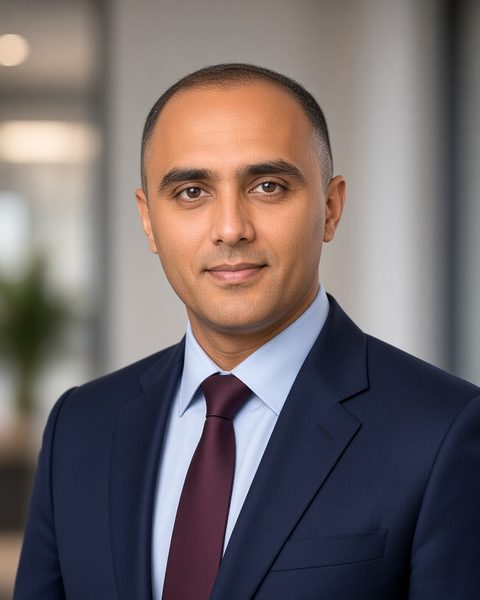
Portrait of Dr Waqas Khan, Head of Paediatrics
Head of Paediatrics

Dr Waqas Khan

Founder & CEO
  • MBBS
  • FCPS (Paediatrics)

Dr Waqas Khan founded the academy to make high-quality, practical medical education affordable for doctors, nurses and allied health professionals across Pakistan. He leads all paediatrics teaching.
Try before you register

Sample lecture & notes

Sample lecture
Sample notes

Curriculum & Study Guide: what the exam asks + the opening of Module 1 (preview). A preview of the notes you'll receive with this course.

Download sample notes (PDF)
FAQs

Common questions

Which exams does this course cover?

FCPS Part II Paediatrics, IMM Paediatrics, MRCPCH and other postgraduate paediatric exams. The core content overlaps heavily; exam-specific tips are included.

Who can join?

This course is for doctors only. It is built for FCPS Part II Paediatrics, IMM and MRCPCH candidates. Our other courses are open to doctors, nurses and allied health professionals.

When do the next batches start?

The November batch starts on 1 November 2026 and the December batch starts on 1 December 2026. Register online on this page to reserve your place.

How long is it, and how often do we meet?

Two months: eight weeks of live classes on Zoom every Monday, Wednesday, Friday and Sunday, 8–10 PM Pakistan time (32 sessions of 2 hours, 64 hours in total), plus a grand test each week on its scheduled class day, as per the curriculum. The next batches start on 1 November 2026 and 1 December 2026.

When are the live classes, and on which platform?

Live classes are on Zoom, every Monday, Wednesday, Friday and Sunday, 8–10 PM Pakistan time. Batches are kept small so everyone gets individual attention, and every session is recorded.

What is the fee?

PKR 8,000, one-time, for the full 2-month course. There is no early-bird offer.

Which books is it based on?

Nelson Textbook of Pediatrics, 22nd edition, with MCQ practice from Qbank, LANGE, PreTest and Pastest, and long-case approaches drawn from the standard local long-case books.

Do I have to read before class?

It helps but is not required. Each session lists its Nelson chapters, and the notes summarise what matters.

What do I receive when I register?

Access to the live sessions and 6 months of access to the recordings, comprehensive notes, MCQ practice, grand tests, the free WhatsApp group and the complete Curriculum & Study Guide.

Do you guarantee a pass?

No course can honestly guarantee a result. We focus on structured preparation, practice and feedback.

Will I get a certificate?

Yes, a certificate of completion, issued within 7 days of the final class. This is clinical skills training, not a PMDC/HEC-recognised degree or postgraduate qualification.

Sample certificate of completion from Ashfaq Academy of Clinical Medicine, marked SAMPLE SAMPLE
Sample certificate of completion (tap to enlarge). Yours carries your name, the course dates, a certificate number, Dr Waqas Khan's signature and the institute seal. PDF
Do returning students get a discount?

Yes. If you have attended any of our courses or workshops before, you get a discount on your next one. Please ask us on WhatsApp for the current discount.

How do I get the Zoom link and recordings?

Each batch has its own private WhatsApp group. Zoom join links, recordings and case discussions are shared there. You are added once your payment is confirmed.

I live outside Pakistan. Can I join?

Yes, overseas students are welcome. 8 PM Pakistan time is 7 PM in the UAE, 6 PM in Saudi Arabia and 3 PM in the UK in winter (GMT), or 4 PM during British Summer Time. Register with your own country code and pay by JazzCash, Easypaisa or UBL bank transfer.

How do I register and pay?
  1. Fill in the registration form and choose your course. You will get a reference number such as AACM-261019-AB12.
  2. Send the course fee to one of our accounts: JazzCash: 03216385907 (Waqas Khan); Easypaisa: 03216385907 (Waqas Khan); UBL (United Bank Limited): account title Waqas Khan, account no. 0381318599799, IBAN PK33UNIL0109000318599799. Please write your reference number in the transfer note.
  3. Upload your payment receipt (image or PDF, up to 8 MB) with the transaction ID.
  4. We verify your payment and confirm your seat on WhatsApp. You can download a PDF of your registration straight away.

Courses marked 'Coming soon' only need a short 'register interest' form; there is no payment until dates are announced.

Course poster

Share this course

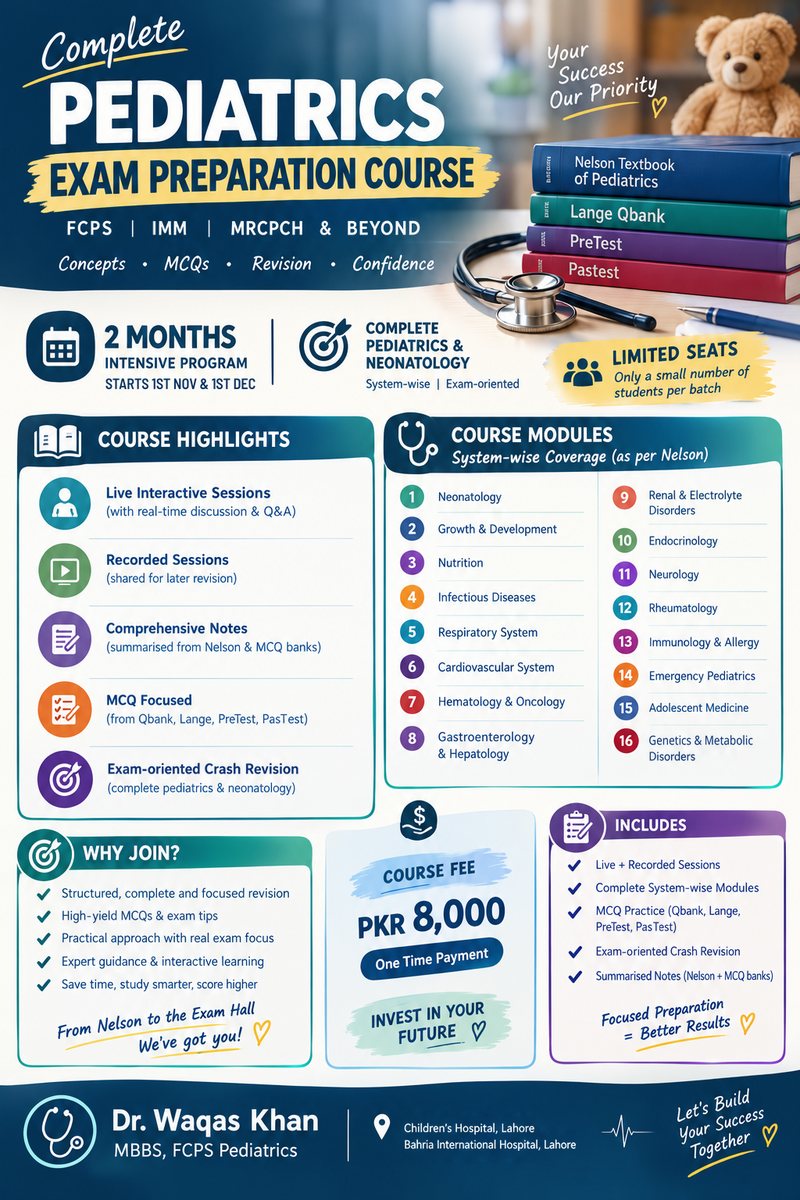
Tap the poster to view it full size, download it, or send it to a colleague on WhatsApp.

Complete Pediatrics Exam Preparation Course poster: 2-month intensive programme starting 1 November and 1 December, 16 system-wise modules, PKR 8,000, with Dr Waqas Khan
Student reviews

What our students say

Thank you so much for all these classes, sir. They really boosted my confidence and strengthened my grip. I wasn't able to attend any of them live, but I am catching up on the recorded videos.

Maryam FehminaOPD Masterclass · June batch

Today is my first day as a house officer in paeds! Thank you for guiding me through all the basics and for creating this group. I have truly learned a lot here and will continue to do so.

Maryam IrshadOPD Masterclass · Batch 2

Thank you so much for such an interesting and informative lecture, for new consultants as well as those who have been out of practice for a long time! I'm really glad to see doctors teaching alongside their duties with such devotion. Keep up the good work. JazakAllah.

Dr Ambrina SulemanNeonatology · Batch 2

Thank you, sir, for sharing the recordings. The sessions are extremely useful, and I truly appreciate your efforts.

Dr NaeemOPD Masterclass · Batch 5

I don't want these sessions to end. Kaafi kuch revise ho jata hai, aur kaafi kuch naya seekhne ko milta hai. JazakAllah.

MinaNeonatology · Batch 2

All these online lectures and notes are really, really helpful. May Allah bless you even more.

Dr Ambrina SulemanNeonatology · Batch 2
“An interesting and logical lecture.”— Dr Awais Talib“An interesting and informative session.”— Dr Aman Shaikh“A very informative and supportive group.”— Dr Shafqat Ullah“Great explanation.”— Dr Zain“Well explained.”— Asma

See all student reviews & original messages →

Download poster